
AI Video
What Is the Best AI Video Generator Right Now?
If you want the shortest possible answer: the best AI video generator right now depends on your goal.

If you want the shortest possible answer: the best AI video generator right now depends on your goal. For realistic text-to-video, editing speed, or social content production, different tools lead in different areas. This guide helps you identify the right option based on quality, workflow, pricing, and use case—so you can choose confidently instead of guessing.
How to Choose the Best AI Video Generator
Conclusion: The “best” tool is the one that matches your content goals, not necessarily the one with the most features.
Explanation: AI video generators vary widely. Some focus on cinematic realism, others on quick marketing clips, avatar videos, or turning text into short-form content. A tool that looks impressive in demos may not be practical if it is slow, expensive, or hard to revise.
Practical advice: Before choosing, ask these questions:
- Do you need text-to-video, image-to-video, avatar videos, or video editing assistance?
- Is your priority realism, speed, or brand consistency?
- Will you use it for social media, ads, training, or internal communication?
- Do you need team collaboration, voiceovers, or captions built in?
Quick Comparison Table
| Use Case | What to Look For | Typical Best Fit |
|---|---|---|
| Cinematic text-to-video | Strong motion quality, realistic visuals | Advanced generative video tools |
| Marketing and social clips | Fast editing, templates, captions | Template-based AI video editors |
| Presenter or training videos | Avatar support, voice cloning, script-to-video | AI avatar platforms |
| Repurposing content | Auto-cutting, subtitles, summaries | AI editing and repurposing tools |
| Brand content at scale | Collaboration, templates, brand kits | Team-focused video platforms |
The Main Types of AI Video Generators
Conclusion: There is no single best AI video generator for every task because the category includes several different product types.
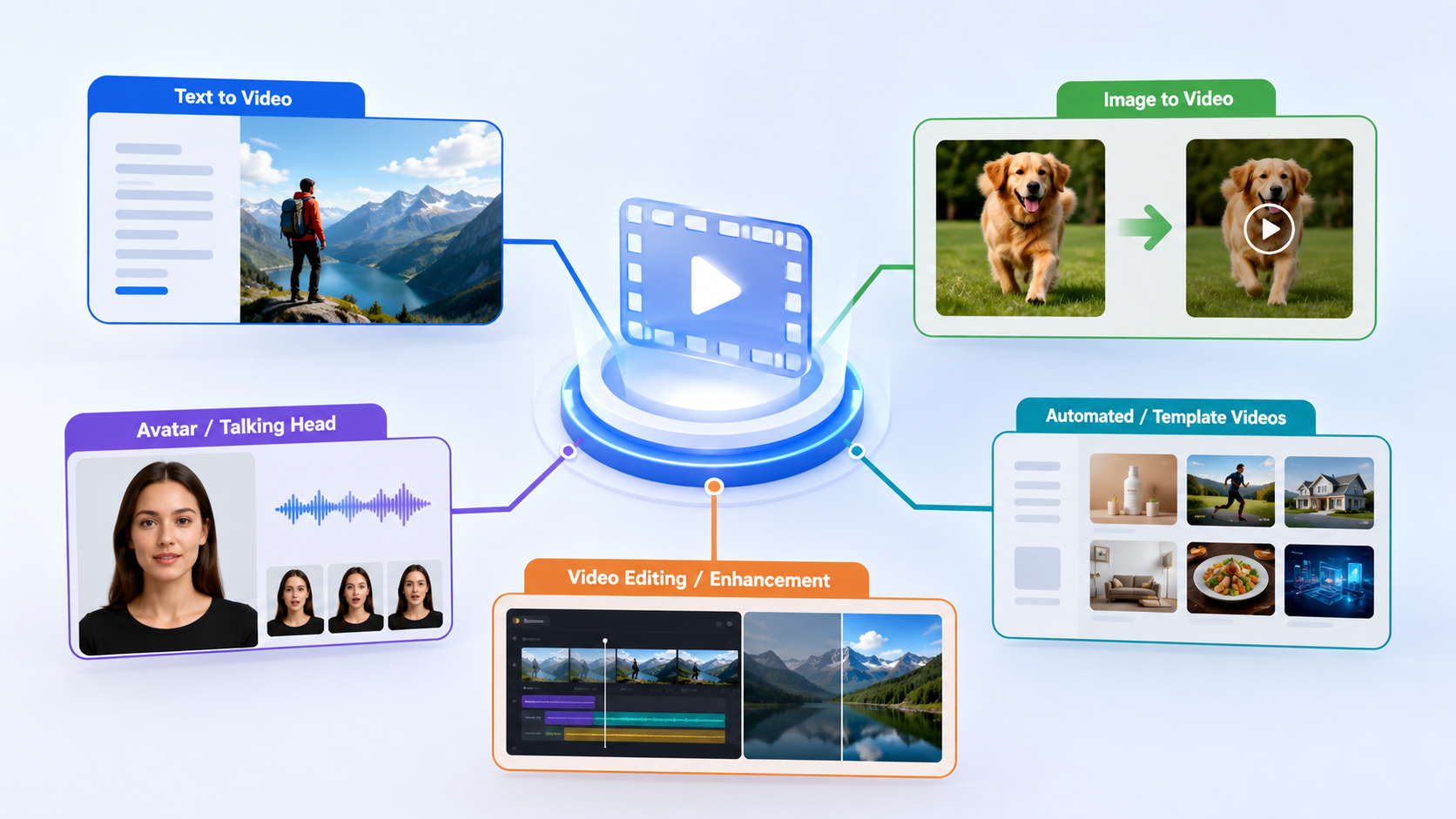
Explanation: Most AI video tools fall into a few broad groups:
-
Text-to-video generators
These turn prompts into animated or cinematic scenes. They are best for experimentation, concept visuals, and short creative clips. -
Avatar video platforms
These create videos with a digital presenter reading a script. They are useful for training, onboarding, and explainer content. -
AI video editors
These help you cut, enhance, caption, resize, and repurpose existing footage. They are best when you already have source video. -
Template-driven content tools
These are built for marketing, social media, and branded content. They often include stock assets, captions, and quick export formats.
Practical advice: Match the tool to the job:
- Choose text-to-video if you want original generated scenes.
- Choose avatars if you need a face-on-camera style without filming.
- Choose AI editing tools if you already have footage.
- Choose template tools if speed and output consistency matter most.
What Usually Makes One Tool Better Than Another
Conclusion: The best AI video generator is usually the one that balances quality, control, and workflow efficiency.
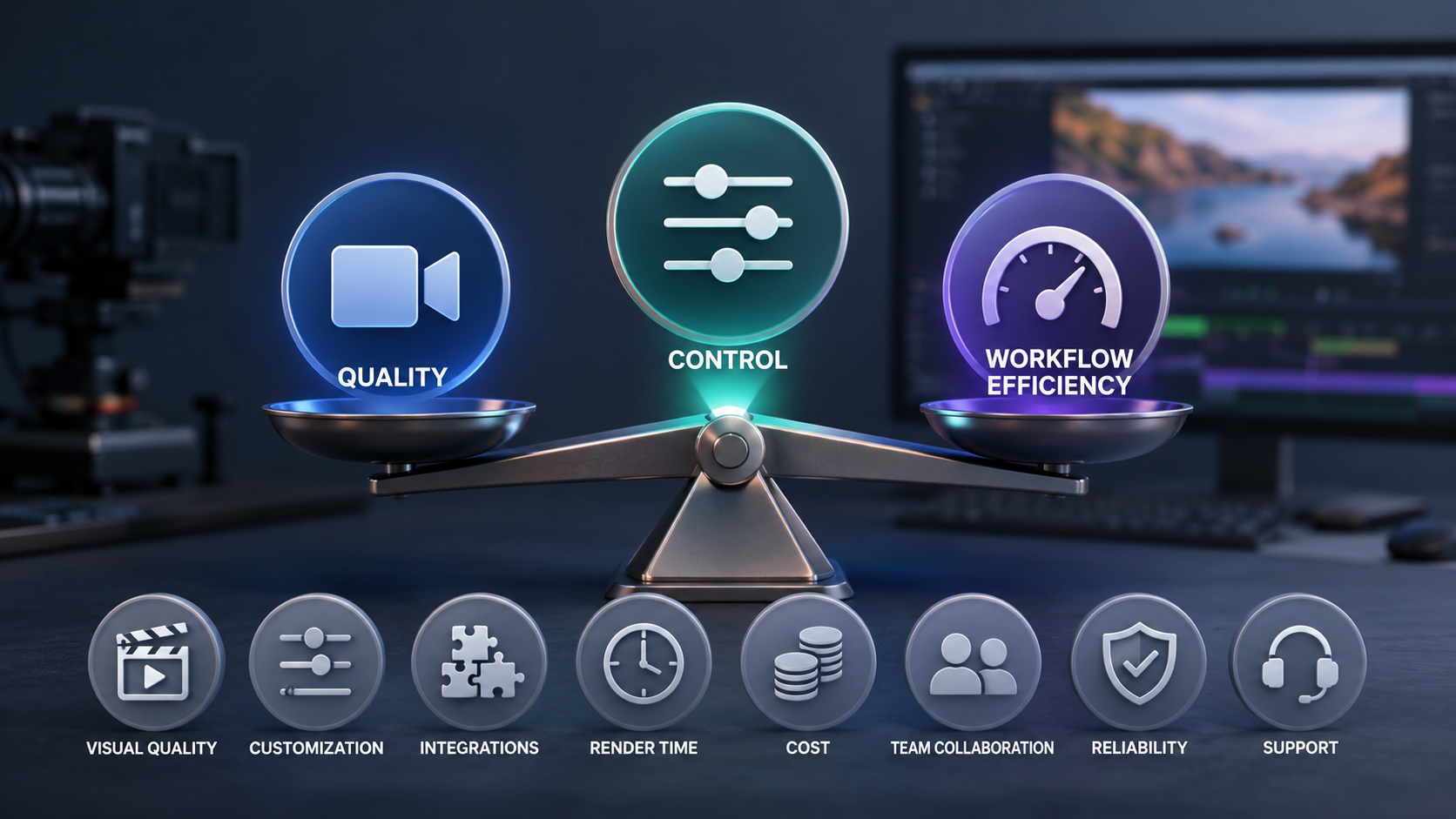
Explanation: A tool may be technically impressive but still not be the right choice if it lacks practical features. When evaluating options, focus on what affects real production work:
- Output quality: Does the video look polished enough for your audience?
- Prompt control: Can you guide the result accurately?
- Editing flexibility: Can you revise scenes, timing, and captions easily?
- Rendering speed: How long does it take to export usable results?
- Ease of use: Can your team learn it quickly?
- Brand consistency: Can you keep fonts, colors, and messaging aligned?
- Rights and usage terms: Are the outputs suitable for your intended use?
Practical advice: Test each tool with the same short brief. For example, use one script, one style prompt, and one target audience. Then compare:
- visual quality
- accuracy to prompt
- editing convenience
- final export quality
- amount of manual cleanup needed
This method gives you a far better answer than feature lists alone.
Best AI Video Generator by Common Need
Conclusion: The best choice depends on your most important outcome.
Explanation: Here is a simple way to narrow your options without overcomplicating the search:
- If you want creative, generated visuals, prioritize tools with strong text-to-video or image-to-video performance.
- If you want business explainers or training videos, prioritize avatar platforms and script-based workflows.
- If you want social media volume, prioritize tools with templates, captions, resizing, and fast exports.
- If you want post-production help, prioritize AI editors that improve existing footage.
- If you want all-around convenience, prioritize a tool that combines generation, editing, and publishing support.
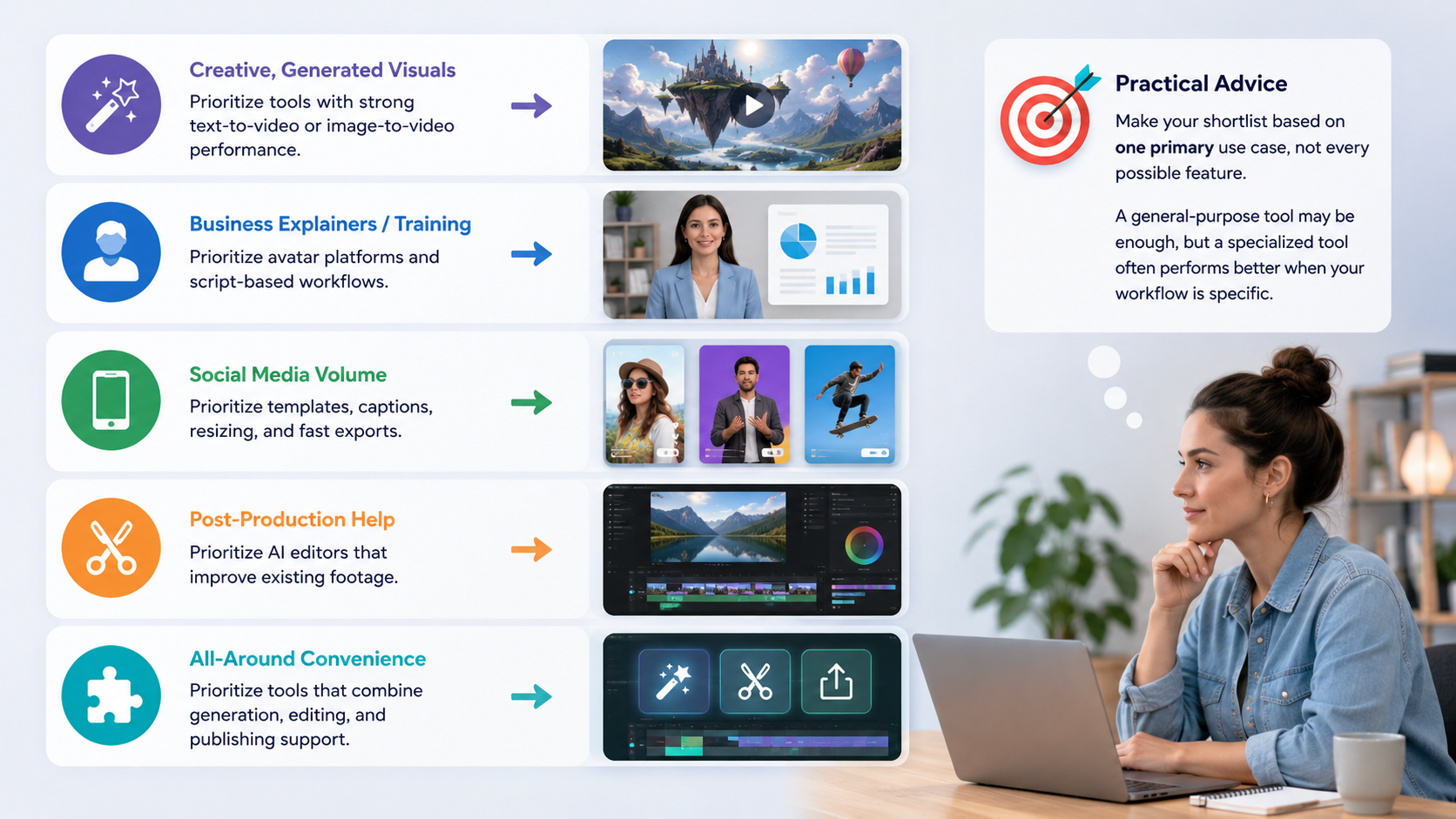
Practical advice: Make your shortlist based on one primary use case, not every possible feature. A general-purpose tool may be enough, but a specialized tool often performs better when your workflow is specific.
Final Recommendation: Choose for Workflow, Not Hype
Conclusion: The best AI video generator right now is the one that helps you publish better videos faster with the least friction.
Explanation: New tools appear quickly, and many look similar on the surface. But the “best” option for you should reduce time spent on scripting, editing, and revisions while still producing the quality your audience expects.
If you are choosing today, focus on:
- your content format
- your production volume
- your quality bar
- your need for collaboration
- your budget and usage rights
Practical advice: Start with a trial or one-month test if possible. Build one real video workflow from start to finish before committing. That will reveal whether the tool is genuinely useful in your day-to-day process.
FAQ
What is the best AI video generator right now?
The best AI video generator depends on your use case. For realistic generated scenes, text-to-video tools are strongest. For business explainers, avatar platforms are often better. For fast marketing content, template-based editors usually win.
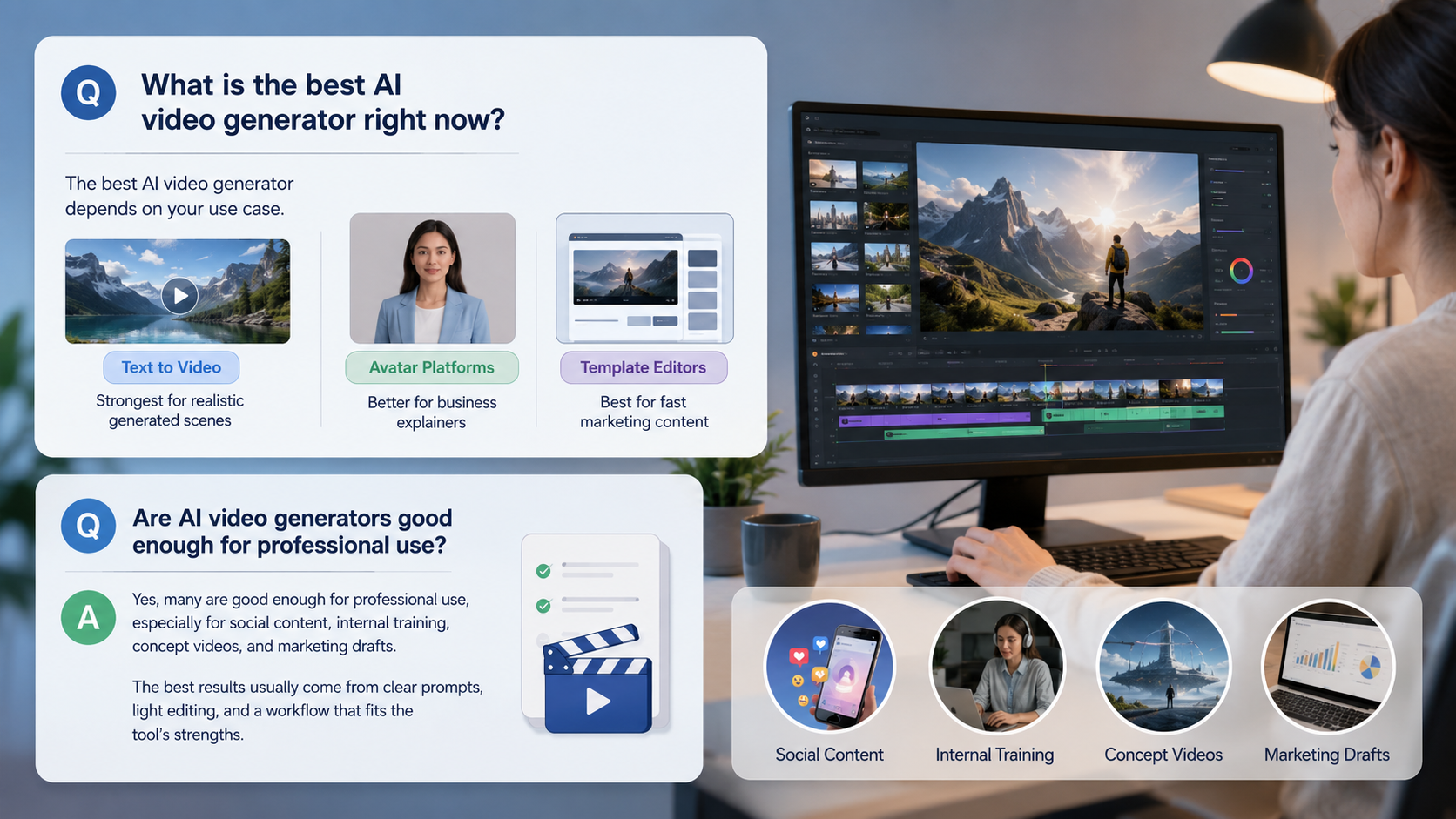
Are AI video generators good enough for professional use?
Yes, many are good enough for professional use, especially for social content, internal training, concept videos, and marketing drafts. The best results usually come from clear prompts, light editing, and a workflow that fits the tool’s strengths.
What should I compare before choosing one?
Compare video quality, ease of use, editing control, rendering speed, export options, and usage terms. These factors matter more than headline features.
Should I use an AI video generator instead of a human editor?
Not always. AI tools are excellent for speed, drafts, and repetitive tasks, but human editing still matters for creative direction, accuracy, and final polish.
Can one tool handle every type of video?
Some platforms try to do that, but many users get better results from a specialized tool for one core task rather than a single all-purpose platform.
Conclusion
The best AI video generator right now is not a single universal winner. It is the tool that best fits your content type, workflow, and quality requirements. If you need cinematic generation, choose a strong text-to-video tool. If you need explainers, choose an avatar platform. If you need speed and scale, choose an AI editor or template-based system. The right choice is the one that helps you create consistently with less effort.
To try these ideas on your own material, start with Seedance 2.0 or Wan 2.7.