
AI Image
What Are Good AI Image Generators?
Good AI image generators are the ones that reliably turn your prompt into the kind of image you actually want.

Good AI image generators are the ones that reliably turn your prompt into the kind of image you actually want. For most readers, the main question is not whether these tools are impressive—they are—but which ones are practical, easy to use, and worth your time. This guide helps you compare the most useful options, understand what makes them “good,” and choose the right generator for your needs.
What Makes an AI Image Generator Good?
A good AI image generator is not just the one that makes the most dramatic images. It is the one that balances quality, control, speed, and ease of use.
In practice, a good generator should:
- Produce clear, visually appealing images
- Follow prompts accurately
- Offer useful style or editing controls
- Be simple enough to use consistently
- Fit your purpose, whether that is marketing, concept art, blogging, or personal projects
Practical advice
If you are choosing a tool, start by asking one question: What do I need the image for?
A tool that is excellent for artistic experimentation may not be the best for product mockups or branded social media visuals.
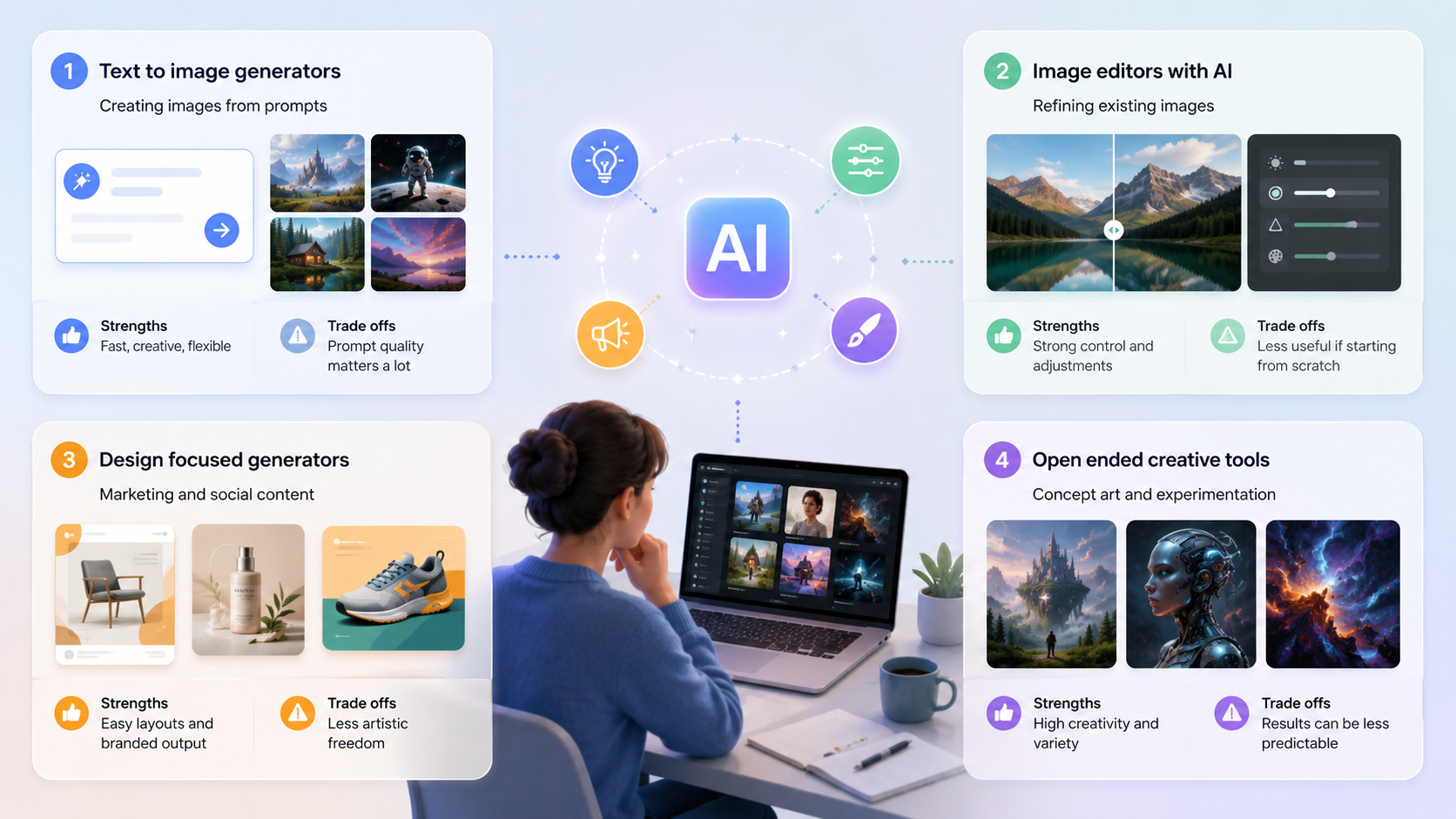
Common Types of AI Image Generators
Different generators are built for different workflows. Understanding the main categories makes it easier to pick the right one.
| Type of tool | Best for | Strengths | Trade-offs |
|---|---|---|---|
| Text-to-image generators | Creating images from prompts | Fast, creative, flexible | Prompt quality matters a lot |
| Image editors with AI | Refining existing images | Strong control and adjustments | Less useful if starting from scratch |
| Design-focused generators | Marketing and social content | Easy layouts and branded output | Less artistic freedom |
| Open-ended creative tools | Concept art and experimentation | High creativity and variety | Results can be less predictable |
Conclusion
There is no single “best” AI image generator for everyone. The right choice depends on how much control you need and how polished the final image must be.
Practical advice
If you are new to AI image generation, begin with a tool that offers both simple prompts and basic editing features. That gives you room to experiment without getting overwhelmed.
Good AI Image Generators to Consider
Several well-known tools are commonly used because they serve different needs well. Rather than claiming one is best overall, it is more useful to think about what each one is good at.
1. DALL·E
Known for generating images from text prompts in a straightforward way.
Why people use it
- Easy to start with
- Good for general-purpose image creation
- Useful for quickly testing visual ideas
Practical advice Use DALL·E when you want a simple prompt-to-image workflow and do not need highly specialized controls.
2. Midjourney
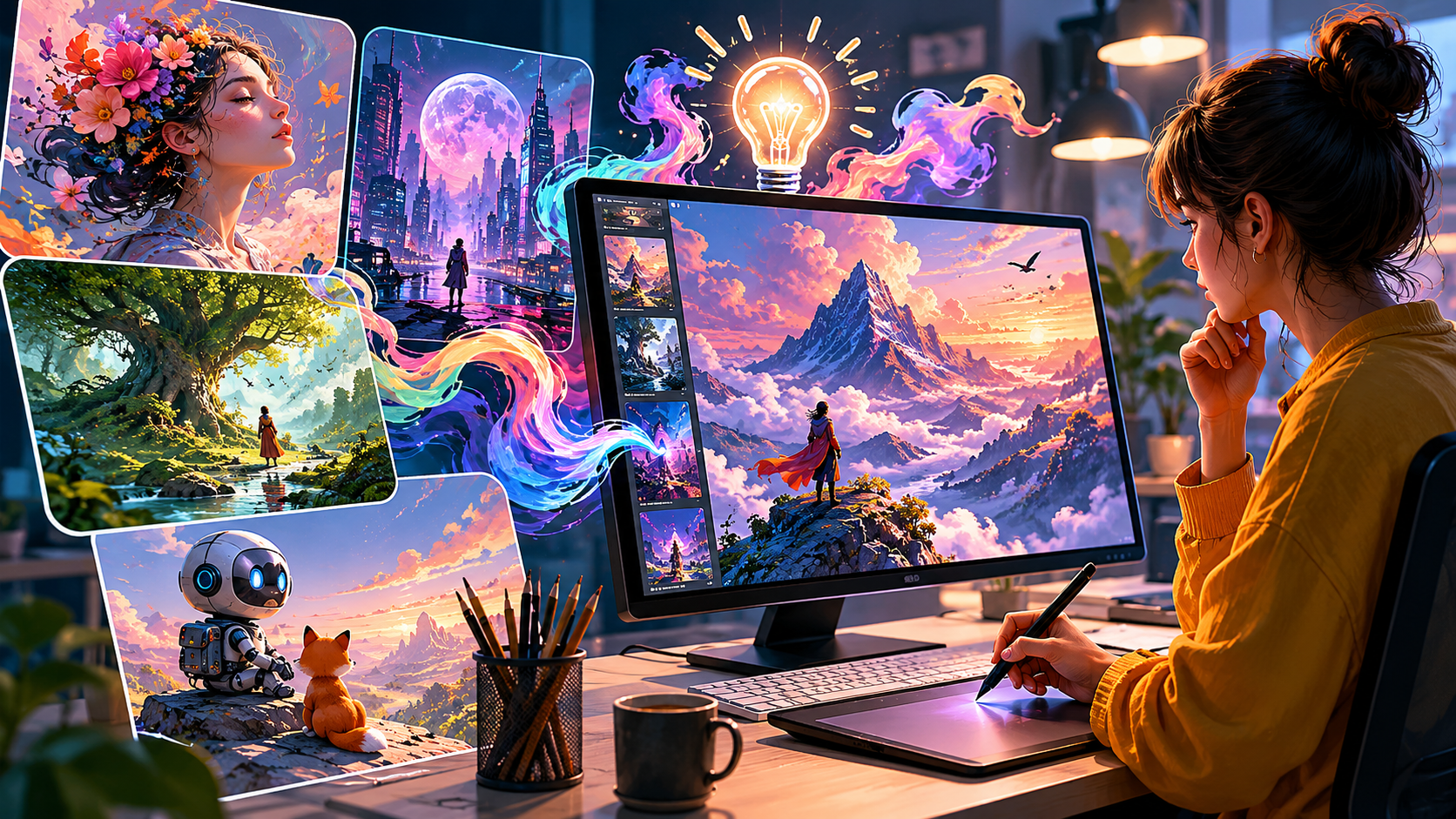
Often chosen for stylized, artistic, and visually striking outputs.
Why people use it
- Strong aesthetic quality
- Good for creative concepts
- Often preferred for stylized visuals
Practical advice Choose Midjourney if your priority is visual style and creativity rather than exact realism or strict prompt compliance.
3. Adobe Firefly
Designed with creative workflows and editing in mind.
Why people use it
- Fits into design-oriented work
- Useful for image generation and editing
- Helpful for users already in Adobe workflows
Practical advice Firefly is a strong option if you want AI image generation as part of a broader design process.
4. Stable Diffusion
Popular among users who want flexibility and more control.
Why people use it
- Highly customizable
- Can be adapted to many workflows
- Favored by more advanced users
Practical advice Stable Diffusion is a good fit if you are comfortable with more technical setup or want deeper control over outputs.
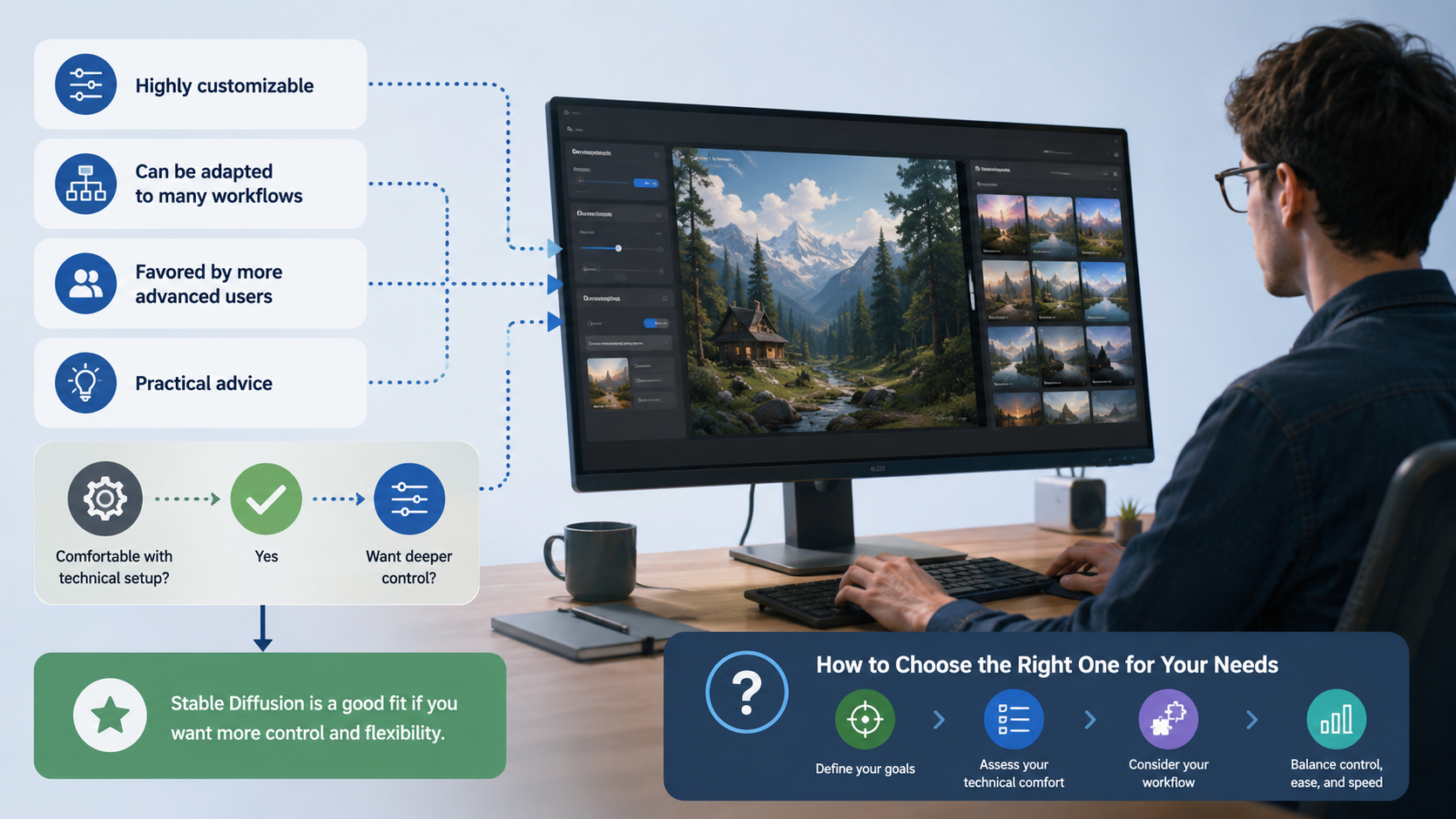
How to Choose the Right One for Your Needs
The best AI image generator is the one that matches your workflow, not the one with the most hype.
Choose based on these criteria:
- Ease of use: Do you want something simple or highly customizable?
- Image style: Do you need realism, illustration, product visuals, or abstract art?
- Editing needs: Will you edit images after generating them?
- Speed: Do you need fast results for content production?
- Consistency: Do you need repeatable output for branding or campaigns?
Conclusion
A tool is “good” when it saves you time and gets you closer to the image you imagined. If you need quick ideas, use a simpler generator. If you need polished visuals, look for stronger style control and editing options.
Practical advice
Make a shortlist of two or three tools and test the same prompt in each one. Comparing results is often the fastest way to find the right fit.
Tips for Getting Better Results from Any AI Image Generator
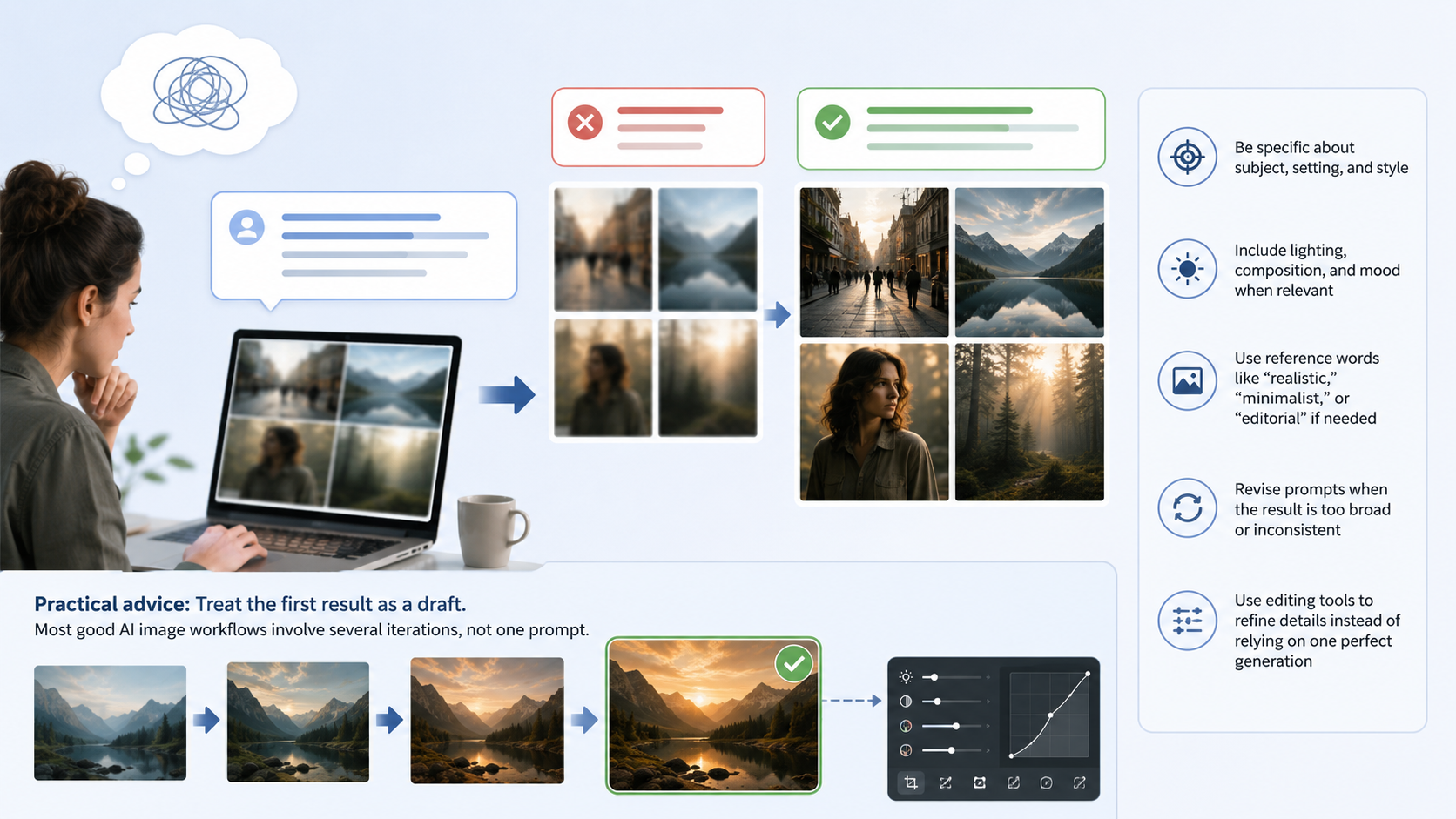
Even a strong generator can produce poor results if the prompt is vague. The way you ask matters.
Helpful prompt-writing tips:
- Be specific about subject, setting, and style
- Include lighting, composition, and mood when relevant
- Use reference words like “realistic,” “minimalist,” or “editorial” if needed
- Revise prompts when the result is too broad or inconsistent
- Use editing tools to refine details instead of relying on one perfect generation
Practical advice
Treat the first result as a draft. Most good AI image workflows involve several iterations, not one prompt.
FAQ
What are good AI image generators for beginners?
Good beginner-friendly options are tools with simple interfaces and fast results, such as DALL·E or design-focused generators. These make it easier to learn prompt writing without a steep learning curve.
Which AI image generator is best for artistic images?
Midjourney is often preferred for stylized and artistic output. It is a strong choice when visual quality and creative expression matter more than strict realism.
Which AI image generator gives the most control?
Stable Diffusion is widely known for flexibility and customization. It is often a better fit for advanced users who want more control over the generation process.
Are AI image generators good for professional use?
Yes, many people use them for professional tasks such as concept art, social media visuals, marketing drafts, and design exploration. The best tool depends on your workflow and quality requirements.
Conclusion
Good AI image generators are the ones that match your goals, your skill level, and your workflow. Some are better for quick ideas, some for polished artistic results, and others for design or editing. If you want the best outcome, focus less on the “most powerful” tool and more on the one that consistently gives you useful results for your specific task.
To try these ideas on your own material, start with image to image editing. Credit costs for each model are listed on the pricing page.