
AI Image
Which AI Image Generator Is Best for Explicit Content?
If your main concern is finding the best AI image generator for explicit content, the most important answer is this: there is no universally “best” tool.

If your main concern is finding the best AI image generator for explicit content, the most important answer is this: there is no universally “best” tool. The right choice depends on what you mean by explicit content, the platform’s content rules, your legal and ethical boundaries, and whether you need realism, stylization, privacy, or workflow control.
This article helps you evaluate AI image generators safely and strategically. Instead of guessing, you’ll learn what to look for, what trade-offs matter, and how to choose a tool that fits your needs without crossing policy or legal lines.
1) First: Define What “Explicit Content” Means
Conclusion: Before choosing a generator, be precise about the type of content you mean. Many tools treat “explicit” differently, and that affects what is allowed.
Explanation:
“Explicit content” can refer to several categories, including:
- Nudity or sexual imagery
- Provocative but non-explicit artistic content
- Mature themes without graphic detail
- Violent or graphic content
- Content that may be restricted by age, consent, or platform policy
Different AI tools have very different moderation rules. Some allow artistic nudity but block sexual content. Others may filter anything that resembles adult material. In practice, the “best” generator is often the one whose policy matches your intended use.
Practical advice:
- Read the tool’s content policy before creating anything.
- Separate legal adult content from policy-restricted content.
- Avoid tools that do not clearly state moderation rules.
- If you are creating for publication, check the rules of the host platform too.
2) Compare Tools by Policy, Control, and Output Style
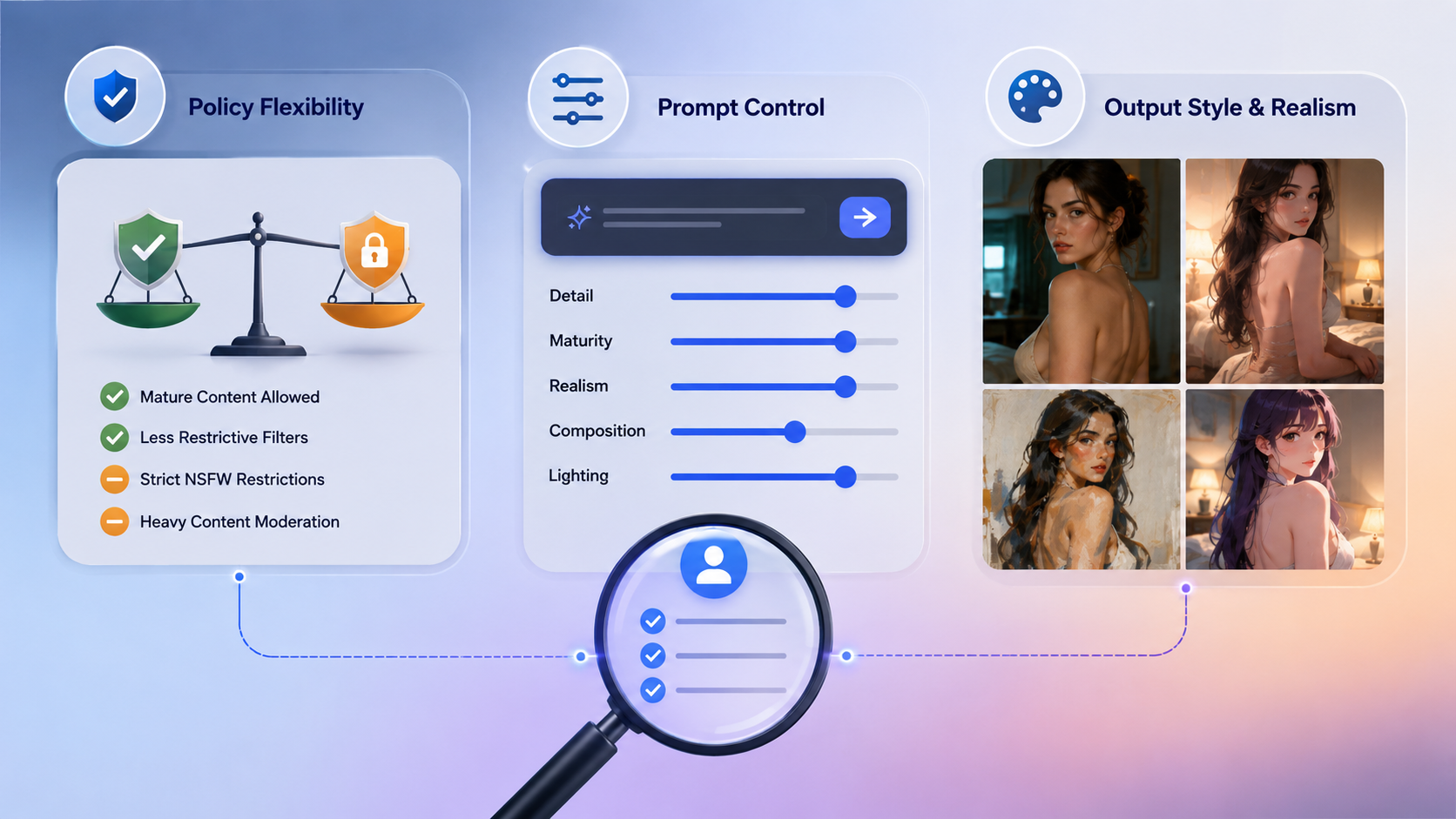
Conclusion: The most useful comparison is not just image quality. For explicit or mature themes, policy flexibility, prompt control, and realism matter just as much.
Explanation:
When evaluating AI image generators, focus on these criteria:
| Factor | Why It Matters | What to Check |
|---|---|---|
| Content policy | Determines what is allowed | Official terms, moderation rules, prohibited prompts |
| Prompt control | Helps shape the result | Detail level, style control, negative prompting |
| Image realism | Affects visual quality | Skin texture, anatomy consistency, lighting |
| Safety filters | Prevents restricted output | How strict the system is |
| Privacy | Important for sensitive prompts | Data retention, account controls |
| Commercial use | Matters if you plan to publish | Licensing and usage rights |
Some generators are designed for broader creative freedom, while others are heavily filtered. If your goal is mature but non-graphic artwork, a tool with strong style control may be better than one that focuses on photorealism. If your goal is compliant publishing, moderation and licensing clarity may matter more than visual realism.
Practical advice:
- Test the same prompt across several tools.
- Compare not only image quality, but also rejection behavior.
- Choose a generator with clear commercial and content-use terms.
- If you need consistency, prioritize prompt control over novelty.
3) Match the Tool to Your Intended Use Case
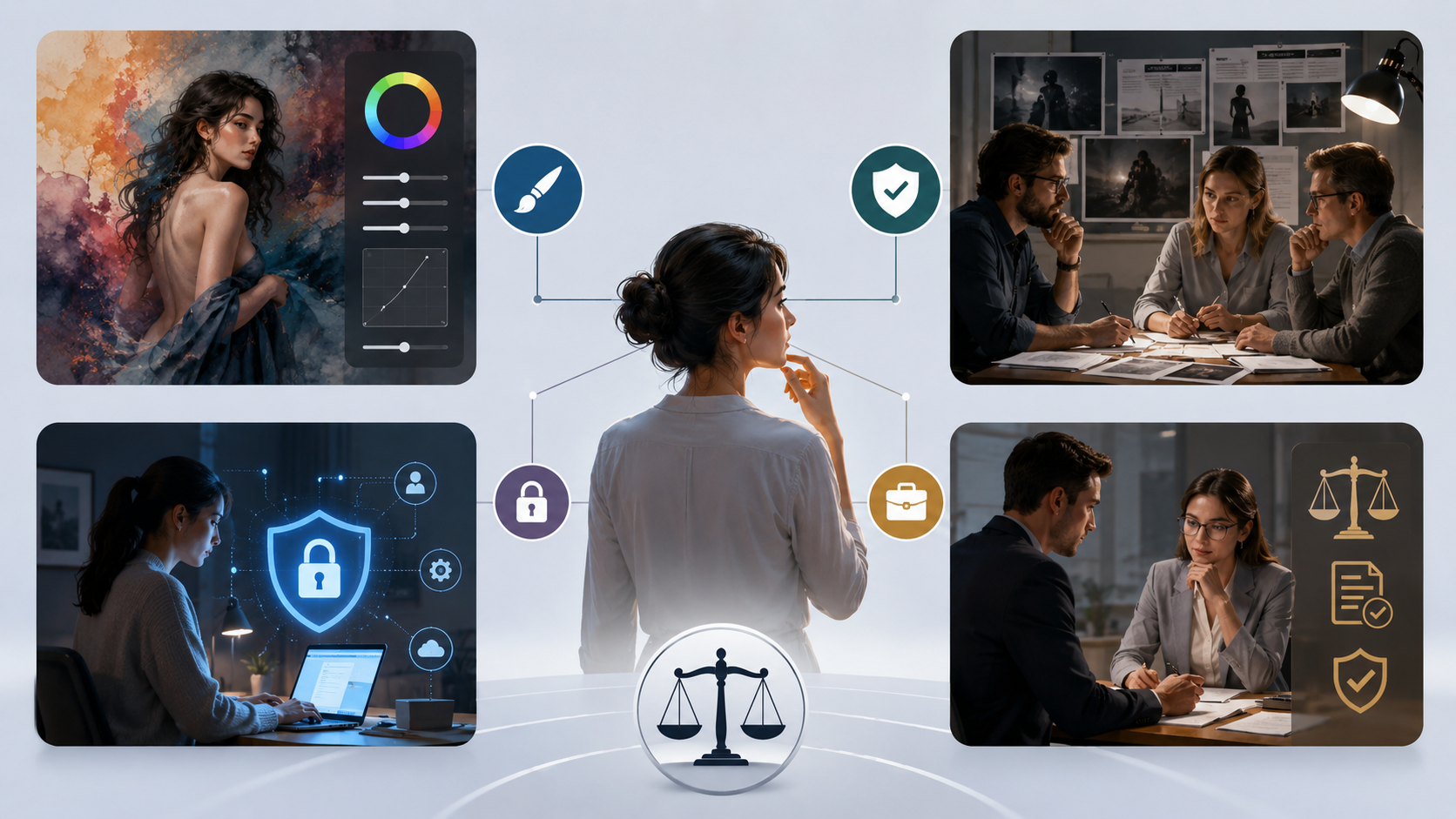
Conclusion: The best generator for explicit content depends on whether you want art, realism, experimentation, or safe editorial content.
Explanation:
Here’s a practical way to think about use cases:
- Artistic or stylized mature imagery: Look for strong style transfer, composition control, and flexible rendering.
- Editorial or conceptual content: Choose tools with dependable moderation and consistent output.
- Private experimentation: Privacy settings and data handling become more important.
- Commercial work: Licensing, safety policies, and platform compliance matter most.
A tool that is permissive may not be the best if you need reliability or public distribution. Likewise, a highly restricted tool may be unsuitable if your project requires mature themes that are still within legal and ethical boundaries.
Practical advice:
- Write down your actual use case before comparing tools.
- Decide whether your priority is realism, art direction, privacy, or compliance.
- Avoid using tools that do not support your intended output in their rules.
- If your project involves people, always confirm consent and rights.
4) Look for Responsible Features, Not Just Freedom
Conclusion: A responsible AI image generator is often the better long-term choice, especially for sensitive content.
Explanation:
For mature or explicit-adjacent work, responsible features help reduce risk. These may include:
- Clear policy documentation
- Content filters with transparent rules
- Age-related restrictions
- Privacy and deletion controls
- Commercial licensing clarity
- Prompt safety guidance
These features do not just protect the platform; they also protect you. They reduce the chance of producing disallowed content, having accounts restricted, or publishing something that causes legal or reputational issues.
Practical advice:
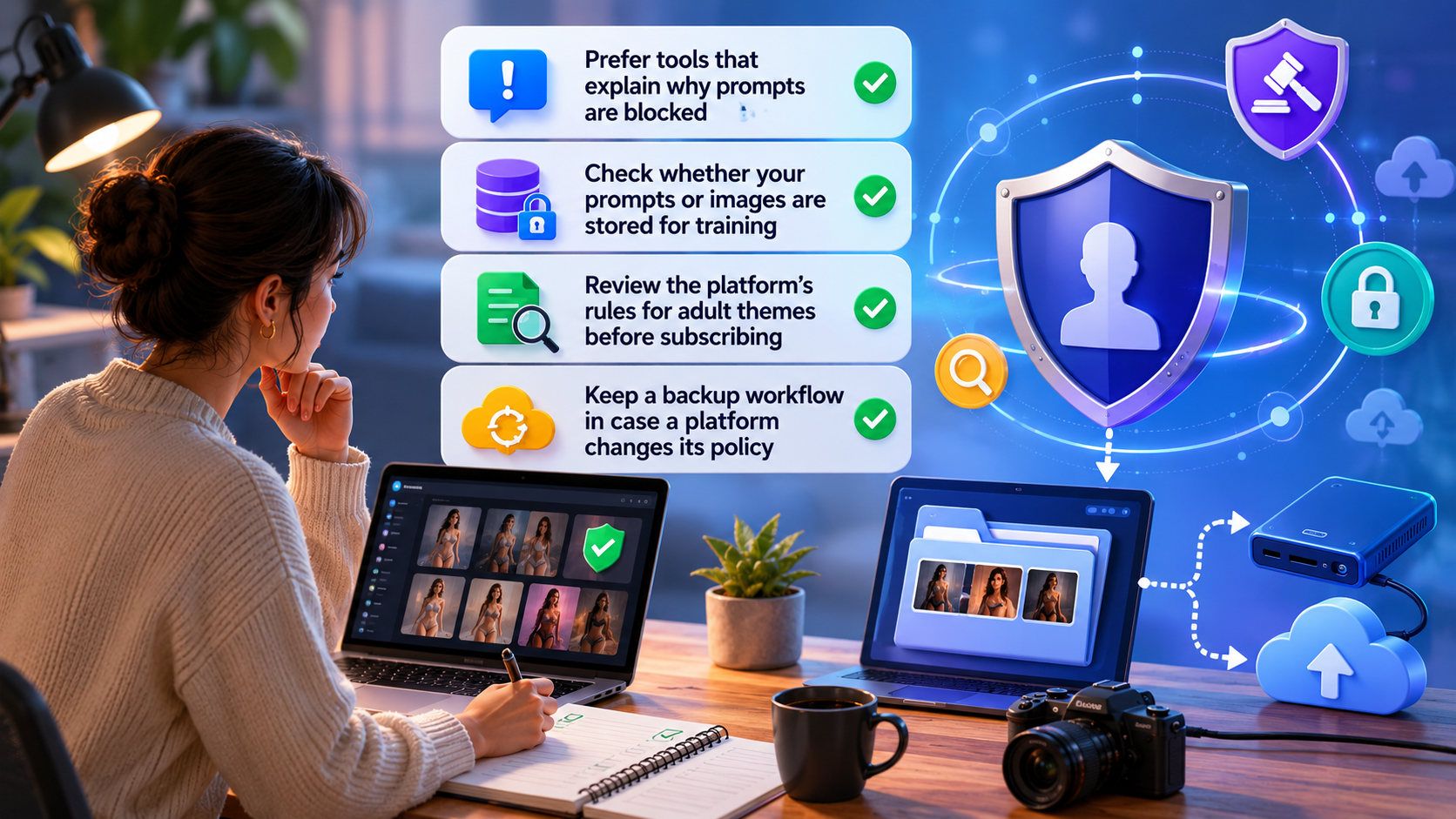
- Prefer tools that explain why prompts are blocked.
- Check whether your prompts or images are stored for training.
- Review the platform’s rules for adult themes before subscribing.
- Keep a backup workflow in case a platform changes its policy.
5) A Simple Decision Framework
Conclusion: The best way to choose is to rank your priorities and select the tool that best fits them.
Explanation:
Use this quick framework:
-
Is the content legal and consensual?
If not, do not proceed. -
Does the tool allow the content category you need?
If the policy blocks it, choose another tool. -
Do you need realism or stylization?
Photorealism and artistic output often require different tools. -
Will you publish it publicly or commercially?
If yes, verify licensing and platform rules. -
Do you need privacy?
If the prompts are sensitive, review data handling carefully.
Practical advice:
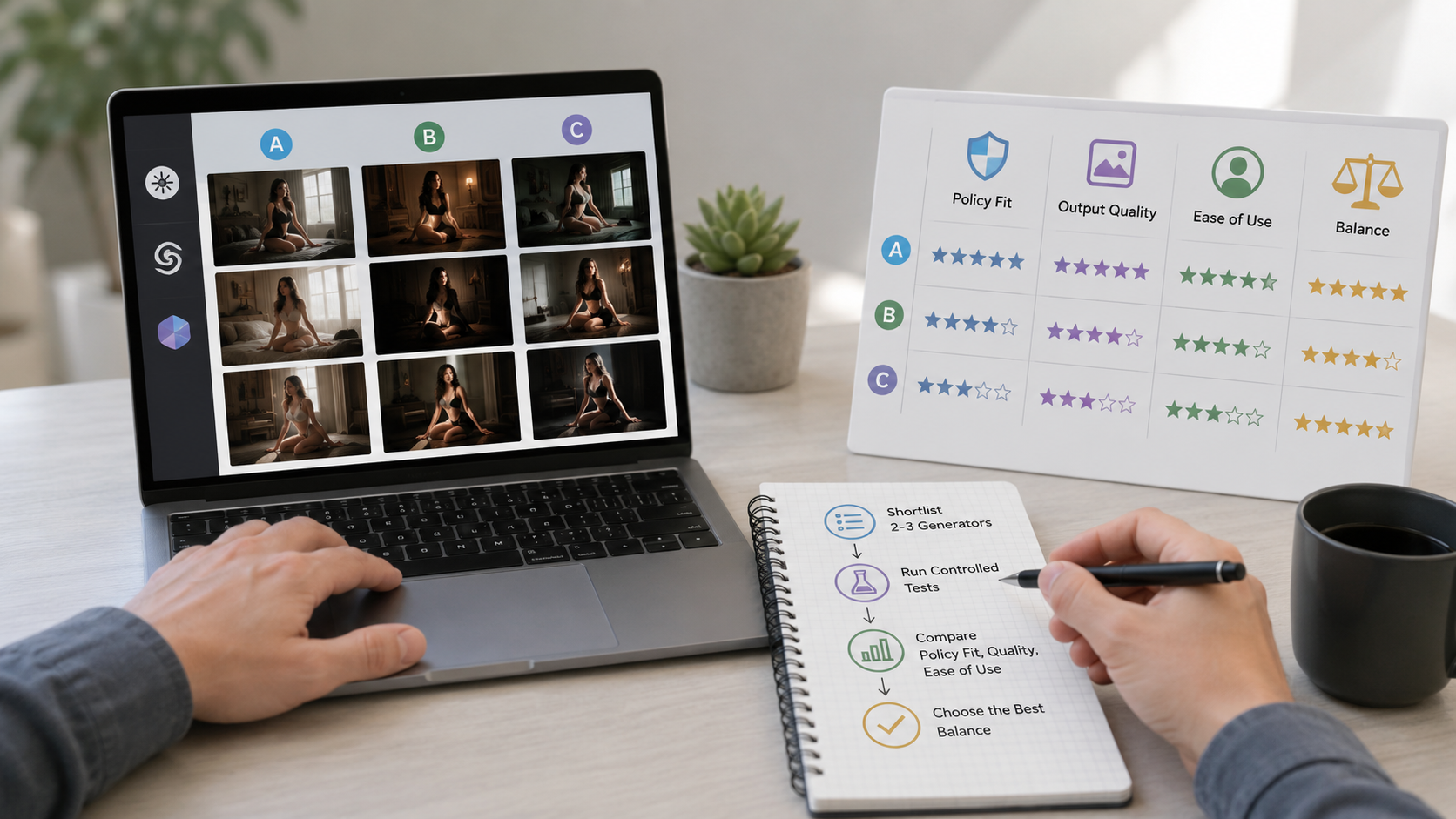
- Make a shortlist of 2–3 generators.
- Run controlled tests with the same prompt structure.
- Compare policy fit, output quality, and ease of use.
- Choose the one that best balances flexibility with compliance.
FAQ
Is there one AI image generator that is best for explicit content?
No. The best choice depends on the type of content, the platform’s policy, your privacy needs, and whether you need commercial usage rights.
Are AI image generators allowed to make adult content?
Some platforms allow certain mature themes, while others prohibit them entirely. Always read the tool’s official policy before using it.
What should I check before using an AI image generator for sensitive prompts?
Check the content policy, moderation rules, privacy settings, licensing terms, and whether the platform stores your prompts or images.
Can I use AI-generated mature images commercially?
Only if the tool’s license and usage terms allow it, and only if the content itself is legal and compliant with the destination platform’s rules.
How do I avoid problems when creating mature AI art?
Stay within the law, follow platform rules, use consent-based content only, and choose tools with transparent moderation and privacy controls.
Conclusion
The best AI image generator for explicit content is not the one with the fewest restrictions; it is the one that matches your legal, ethical, privacy, and publishing needs. Start by defining what kind of content you actually mean, then compare tools by policy, control, realism, and licensing. If you choose carefully, you can avoid frustration and reduce risk while getting the output you need.
To try these ideas on your own material, start with text to image or image to image editing.